
Pigmentation Treatment in Coimbatore | EverGlo
Pigmentation Treatment in Coimbatore: A Complete Guide to Healthy and Even-Toned Skin
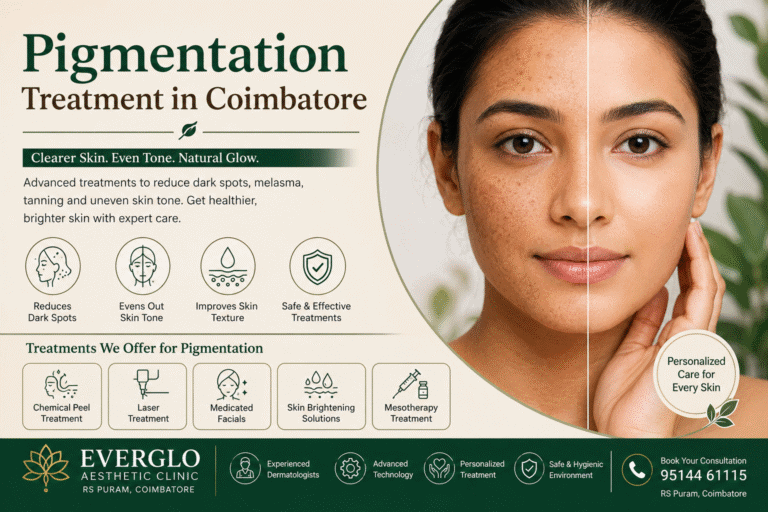
Healthy, clear skin is something many people hope to achieve, but pigmentation is one of the most common skin concerns that can affect people of all ages. Dark spots, uneven skin tone, melasma, acne marks, and tanning often develop gradually and can make the skin appear dull or patchy. While these changes are usually harmless, they can affect self-confidence and encourage people to search for effective treatment options.
Many people try different creams or home remedies to reduce pigmentation, but the results are often temporary because the underlying cause is not addressed.Choosing the best treatment for your skin type and determining the cause of pigmentation are the main goals of professional pigmentation treatment.
If you are looking for pigmentation treatment in Coimbatore, understanding the causes, available treatments, and proper skin care can help you make informed decisions for healthier, brighter skin.
What Is Skin Pigmentation?
Melanin, a pigment, determines the natural color of your skin, which is referred to as pigmentation. Melanin protects the skin from harmful ultraviolet (UV) rays and is produced by specialised skin cells.
Sometimes, the skin produces more melanin than necessary. This excess melanin collects in certain areas, creating dark patches or spots known as hyperpigmentation. Depending on the cause, pigmentation may appear on the face, neck, hands, or other areas frequently exposed to sunlight.
Although pigmentation is generally not dangerous, it often becomes a cosmetic concern because it affects the overall appearance of the skin.
What Causes Pigmentation?
There are several reasons why pigmentation develops. One of the most common causes is prolonged exposure to sunlight. Ultraviolet rays stimulate melanin production, and repeated exposure without proper sun protection can lead to dark spots and uneven skin tone.
Hormonal changes are another common cause, particularly in women during pregnancy or due to hormonal fluctuations. This type of pigmentation is commonly known as melasma.
Pigmentation may also appear after acne, skin injuries, inflammation, or certain cosmetic procedures. In these cases, the skin produces excess melanin as part of the healing process.
Ageing, genetics, certain medications, and lifestyle habits may also contribute to pigmentation.
Common Types of Pigmentation
Pigmentation can appear in different forms depending on its cause.
Melasma usually appears as larger brown or grey patches on the cheeks, forehead, nose, and upper lip. It is often associated with hormonal changes and sun exposure.
Post-inflammatory hyperpigmentation develops after acne, eczema, or skin injuries. Once the skin heals, dark marks may remain for several weeks or months.
Sunspots, also known as age spots, commonly appear on areas frequently exposed to sunlight, such as the face and hands.
Freckles are another type of pigmentation that often becomes darker with repeated sun exposure.
Understanding the type of pigmentation is important because different conditions require different treatment approaches.
How Is Pigmentation Treated?
Professional pigmentation treatment begins with a detailed skin assessment. Identifying the cause helps determine the most suitable treatment plan.
Depending on the condition, treatment may include chemical peels, laser treatments, skin-brightening procedures, customised medical skincare, or a combination of different techniques.
Chemical peels gently exfoliate the outer layer of damaged skin, helping improve uneven skin tone and reduce superficial pigmentation.
Laser treatments target excess melanin with precision and are commonly recommended for deeper pigmentation.
Medical-grade skincare products may also be suggested to improve skin renewal and help maintain long-term results.
Since every person’s skin responds differently, treatment plans are always personalised.
How Long Does It Take to See Results?
Pigmentation does not disappear overnight. The time required depends on factors such as the depth of pigmentation, the underlying cause, skin type, and the treatment selected.
Some people notice gradual improvements after a few sessions, while deeper pigmentation may require a longer treatment plan.
Consistency is important. Following the recommended treatment schedule and maintaining proper skincare helps achieve better long-term outcomes.
Protecting Your Skin After Treatment
Sun protection is one of the most important parts of pigmentation management. Even after successful treatment, excessive sun exposure can trigger new pigmentation.
Applying sunscreen every day, wearing protective clothing when outdoors, staying hydrated, and following a suitable skincare routine all help maintain clearer skin.
Your skin specialist may also recommend products that support skin renewal and reduce the chances of pigmentation returning.
Why Professional Assessment Matters
Pigmentation can have different causes, and treating it without proper diagnosis may delay improvement.
A professional skin assessment helps determine whether pigmentation is caused by sun damage, hormones, acne, or another underlying factor. This allows the treatment to be customised according to your skin condition rather than using a general approach.
Choosing the right treatment from the beginning often leads to better and safer results.
Choosing Pigmentation Treatment in Coimbatore
If you are considering pigmentation treatment in Coimbatore, choosing a clinic that provides personalised skin analysis and evidence-based treatment options is important.
At EverGlo Aesthetic Clinic – RS Puram, Coimbatore, every pigmentation treatment begins with a detailed consultation. The skin is carefully assessed before recommending a personalised treatment plan designed to improve uneven skin tone while maintaining healthy skin.
Final Thoughts
Pigmentation is a common skin concern, but it can often be improved with the right diagnosis, professional treatment, and consistent skincare. Understanding the cause of pigmentation is the first step towards choosing the most suitable solution.
Whether your concern is melasma, acne marks, sunspots, or uneven skin tone, consulting a qualified skin professional can help you develop a treatment plan that suits your skin and your goals.
If you are looking for pigmentation treatment in Coimbatore, professional guidance combined with good skincare habits can help you achieve healthier, brighter, and more even-toned skin over time.