
Chemical Peel Treatment in Velachery | EverGlo
Chemical Peel Treatment in Velachery: A Simple Guide to Healthier-Looking Skin
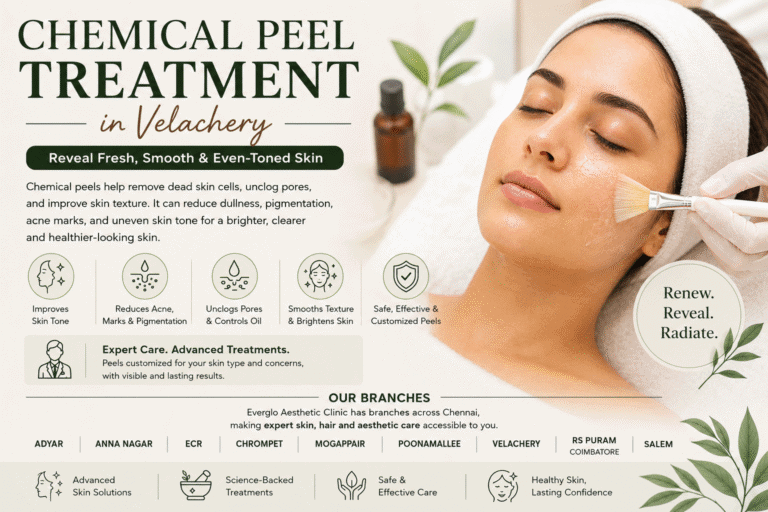
Our skin naturally renews itself, but dead skin cells can build up on the surface over time. Sun exposure, acne, pigmentation, pollution, and everyday stress can also make the skin look dull or uneven.
A chemical peel is one treatment that can help improve the appearance of the skin by encouraging the removal of damaged surface cells. It may be considered for concerns such as uneven skin tone, pigmentation, acne, mild acne marks, and rough skin texture.
What Is a Chemical Peel?
A chemical peel is a professional skin treatment that uses a carefully selected solution on the skin. The solution works on the outer layers of the skin, helping remove damaged or dead cells and supporting the skin’s natural renewal process.
The strength and type of peel can vary. A suitable peel is selected according to the person’s skin type and the concern being treated.
A stronger peel is not always better. The treatment needs to be appropriate for the individual’s skin.
Which Skin Issues Are Addressed by Chemical Peels?
Chemical peels may be considered for several common skin concerns.
They can help improve the appearance of dull skin, uneven skin tone, pigmentation, mild acne marks, rough texture, and certain types of sun-related skin changes.
For people with acne-prone skin, some peels may also help with excess oil and clogged pores.
However, chemical peels are not suitable for every skin condition. A skin assessment is important before choosing the treatment.
How Does the Treatment Work?
Before the treatment, the skin is cleansed and assessed. A suitable peel solution is then applied carefully to the targeted area.
Depending on the type of peel, you may experience mild warmth, tingling, or a temporary sensation on the skin.
The treatment time can vary depending on the peel and the area being treated.
After the procedure, the skin may appear slightly red or feel sensitive for a short period. Some treatments can also cause mild peeling as the skin renews itself.
Can Chemical Peels Improve Pigmentation?
Chemical peels can be considered for certain types of pigmentation and uneven skin tone.
Pigmentation can have many causes, including acne, sun exposure, hormonal changes, and inflammation. Because the cause can be different from person to person, the same peel may not be suitable for everyone.
A professional assessment helps determine whether a chemical peel is appropriate and what type of treatment may be considered.
Can Chemical Peels Help With Acne?
Some chemical peels may be useful for people with oily or acne-prone skin.
They can help remove dead skin cells and excess surface oil, which may support clearer-looking skin. Certain peels may also be considered as part of a treatment plan for acne marks.
However, active or severe acne may require a broader treatment approach rather than relying on a peel alone.
What About Acne Marks and Uneven Texture?
After acne heals, some people are left with dark marks or uneven-looking skin.
A chemical peel may help improve the appearance of certain superficial marks and surface texture over time.
It is important to understand the difference between pigmentation and acne scars. Pigmentation changes the colour of the skin, while acne scars can change the texture. Deeper scars may require other treatments such as microneedling or laser procedures.
Is There Downtime After a Chemical Peel?
Downtime depends on the type and strength of the peel.
Some superficial peels may cause only mild redness or sensitivity, while other peels can cause visible peeling for several days.
During the recovery period, it is important to follow the skincare instructions provided after treatment. Sun protection is particularly important because newly treated skin can be more sensitive to sunlight.
Who Should Consider a Chemical Peel?
Chemical peels may be considered by people who are concerned about:
- Dull-looking skin
- Uneven skin tone
- Certain types of pigmentation
- Mild acne marks
- Rough skin texture
- Excess oil
- Sun-related skin changes
The treatment should always be selected according to the person’s skin condition rather than simply choosing a peel based on its strength.
Why Professional Assessment Matters
Skin reacts differently to treatment depending on factors such as skin type, sensitivity, pigmentation, acne, previous treatments, and current skincare products.
Using an unsuitable peel or incorrect strength can cause irritation and may sometimes worsen pigmentation.
This is especially important for Indian skin tones, where careful treatment selection and aftercare are essential.
Chemical Peel Treatment in Velachery
If you are searching for chemical peel treatment in Velachery, choosing the right treatment is more important than simply looking for the strongest peel.
At EverGlo Aesthetic Clinic – Velachery, the skin is assessed before recommending a suitable treatment approach. Depending on the individual’s concern, a chemical peel may be considered for pigmentation, dullness, acne-related concerns, uneven tone, or skin texture.
The treatment plan is based on the person’s skin condition and desired improvement.
Simple Care After a Chemical Peel
After treatment, the skin needs gentle care.
Use the recommended moisturiser and sunscreen regularly. Avoid unnecessary scrubbing or peeling the skin with your hands.
It is also better to avoid introducing strong skincare products immediately after treatment unless they have been recommended by your skin professional.
Following the aftercare instructions can help the skin recover comfortably.
Final Thoughts
Chemical peels can be a useful option for improving several surface-level skin concerns, including dullness, uneven tone, certain pigmentation concerns, and mild acne-related marks.
The key is choosing the right peel for the right skin. A treatment that works well for one person may not be suitable for another.
If you are considering chemical peel treatment in Velachery, a professional skin assessment can help you understand whether a peel is suitable for your skin and what approach may be appropriate.
Book Your Consultation Today
If you are looking to improve dullness, pigmentation, uneven skin tone, or skin texture, you can consult EverGlo Aesthetic Clinic – Velachery to understand the treatment options suitable for your skin.
Address: Door No 71, Sankaran Nair Avenue, Hexabee Kids Play School Ground Floor, Old No 12, Janakpuri 1st St, Off 100 Feet Road, Velachery, Chennai, Tamil Nadu 600042.
Contact: 9514461115
Our Branches
Everglo Aesthetic Clinic has branches across Chennai and Tamil Nadu, including Adyar, Anna Nagar, ECR, Chrompet, Mogappair, Poonamallee, Velachery, RS Puram in Coimbatore, and Salem, making professional skin, hair, and aesthetic care accessible from multiple locations.