
Chemical Peel Treatment in Velachery | EverGlo
Chemical Peel Treatment in Velachery: A Guide to Smoother, Healthier-Looking Skin
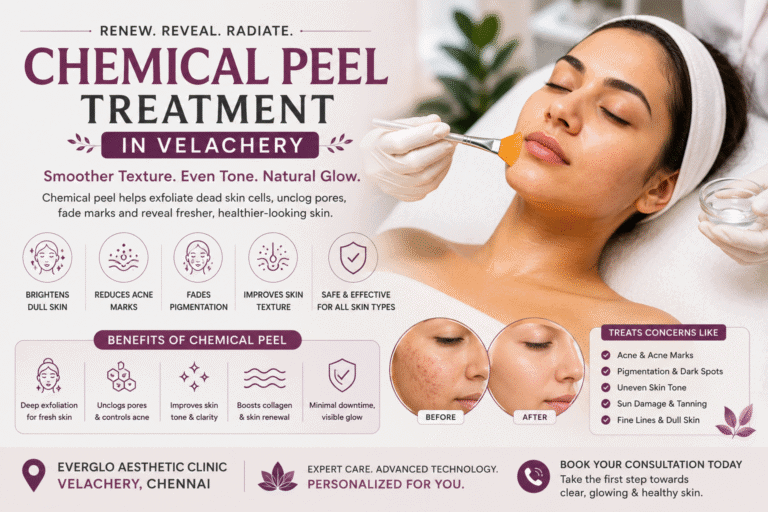
The skin naturally renews itself, but dead skin cells can sometimes build up on the surface and make the complexion look dull, rough, or uneven. Acne marks, pigmentation, tanning, and an uneven skin tone can also affect the overall appearance of the skin.
A good skincare routine can help maintain healthy skin, but some concerns may need professional treatment. Chemical peels are one of the commonly used skin treatments for improving the appearance and texture of the skin.
If you are considering chemical peel treatment in Velachery, understanding how the treatment works, what it can help with, and what to expect can help you make an informed decision.
What Is a Chemical Peel?
A chemical peel is a skin treatment that uses a specially selected solution to remove damaged or dead surface skin cells. This encourages the skin to renew itself and can help improve its overall appearance.
Different types of chemical peels are available, and the strength and ingredients are selected according to the person’s skin type and concern.
A peel may be used to address concerns such as pigmentation, acne marks, dull skin, uneven skin tone, and rough texture. The treatment should always be selected after assessing the skin rather than choosing a peel based only on its name or strength.
How Does a Chemical Peel Work?
During a chemical peel treatment, a carefully selected solution is applied to the skin for a specific period. The ingredients work on the outer layers of the skin and help remove damaged or excess skin cells.
As the treated skin renews, the complexion may gradually appear smoother and more even. Some peels also encourage skin renewal and support collagen production, depending on the type and depth of the treatment.
The exact process varies according to the peel being used and the individual’s skin condition.
What Skin Concerns Can Chemical Peels Help With?
Chemical peels can be used for several common skin concerns.
People with dull-looking skin may choose a peel to improve the appearance of the complexion and remove accumulated dead skin cells.
For people dealing with acne marks or mild pigmentation, certain peels may help improve discolouration and create a more even-looking skin tone.
Chemical peels can also help with rough skin texture and some forms of superficial pigmentation. However, deeper pigmentation or more complex skin conditions may require a different treatment or a combination of treatments.
A skin professional can determine whether a chemical peel is appropriate after examining the skin.
Chemical Peel for Acne and Acne Marks
Acne can leave behind more than just temporary pimples. Once the acne has healed, dark marks and uneven texture may remain.
Certain chemical peels can help improve the appearance of post-acne marks by encouraging skin renewal. They may also be useful as part of a broader acne management plan.
However, active acne and acne scars are not the same concern. A peel may be suitable for some acne-related pigmentation, while deeper acne scars may benefit from treatments such as microneedling or laser-based procedures.
This is why identifying the actual skin concern is important before treatment.
Chemical Peel for Pigmentation
Pigmentation can develop due to sunlight, hormonal changes, acne, inflammation, and other factors. It may appear as dark patches, spots, or an uneven complexion.
Depending on the type and depth of pigmentation, a suitable chemical peel may help improve the appearance of the skin. However, pigmentation can sometimes return if the underlying triggers are not managed.
Sun protection is particularly important for people undergoing pigmentation treatments. Daily sunscreen and appropriate skincare can help protect the skin and maintain improvements.
Is Chemical Peel Suitable for Every Skin Type?
Chemical peels come in different strengths and formulations, so there is no single peel that is suitable for everyone.
The skin’s condition, sensitivity, pigmentation, acne history, and treatment goals should all be considered before selecting a peel.
A professional skin assessment is especially important for people with sensitive skin or a history of pigmentation. Using a peel that is too strong or unsuitable for the skin can lead to irritation or unwanted pigmentation.
What Happens During a Chemical Peel Treatment?
The treatment usually begins with cleansing the skin to remove oil and surface impurities. The selected peel solution is then carefully applied to the treatment area.
Depending on the type of peel, you may experience mild tingling, warmth, or a temporary sensation on the skin. The solution is removed or neutralised according to the treatment protocol.
The entire session may be relatively short, although the duration varies depending on the type of peel and the area being treated.
Your skin professional will explain what you can expect before beginning the procedure.
What Happens After a Chemical Peel?
The skin may appear slightly red or feel sensitive after treatment. Depending on the depth of the peel, some people may experience mild dryness or peeling over the following days.
Not every chemical peel causes visible peeling. The response depends on the type and strength of the treatment.
It is important not to pick or peel the skin manually. Allowing the skin to renew naturally and following the recommended aftercare can help reduce the risk of irritation.
How Many Sessions Are Needed?
The number of chemical peel sessions depends on the skin concern and the type of peel selected.
Some people may undergo a single treatment for a short-term skin refresh, while concerns such as pigmentation or acne marks may require a series of treatments.
A treatment plan should be based on how your skin responds rather than following a fixed number of sessions for everyone.
Skin Care After a Chemical Peel
After a chemical peel, protecting the skin is an important part of the treatment process.
Daily sunscreen helps protect the skin from UV exposure, which can worsen pigmentation. A gentle cleanser and moisturiser may also be recommended to support the skin barrier.
Harsh scrubs, unnecessary exfoliation, and picking peeling skin should generally be avoided during the recovery period.
Following the specific aftercare instructions provided by your skin professional is important because recovery can vary depending on the type of peel.
Why Professional Consultation Matters
Chemical peels are sometimes available as home products, but professional treatment is different because the type and strength of the peel can be selected according to the individual’s skin.
A consultation helps identify whether the concern is pigmentation, acne marks, active acne, tanning, dullness, or another skin condition. It also helps determine whether a chemical peel is the right option.
In some cases, another treatment may be more appropriate, or a combination approach may be recommended.
Choosing Chemical Peel Treatment in Velachery
If you are searching for chemical peel treatment in Velachery, it is important to choose a clinic where your skin is assessed before treatment rather than simply selecting a peel based on its strength.
At EverGlo Aesthetic Clinic, Velachery, skin concerns are assessed during a consultation before recommending a suitable treatment approach. Depending on the condition of the skin, a chemical peel or another skin treatment may be suggested to address the specific concern.
The aim is to improve the appearance and health of the skin through personalised treatment and appropriate aftercare.
Final Thoughts
Chemical peels can be a useful option for people dealing with dull skin, uneven skin tone, acne marks, superficial pigmentation, and rough texture. The results depend on choosing the appropriate peel, following the recommended treatment schedule, and taking proper care of the skin afterwards.
There is no single chemical peel that works for every skin type. A professional assessment is the best way to understand whether a peel is suitable for your concern and what type of treatment may be appropriate.
If you are considering chemical peel treatment in Velachery, professional guidance can help you choose a treatment approach that suits your skin and your individual goals.